

Quick Summary
If a vending machine jams, stop first and switch it off at the wall socket if you can reach it safely. Never reach into the mechanism or lean into the cabinet. Retry the selection once, check the collection area and flap, then contact the operator if the product will not come free.
- Never reach into the dispensing mechanism while the machine is still running
- Make one retry, then wait a moment before trying again
- Do not shake, tilt or kick the machine to free a product
- Note the location, product, time and any fault code before contacting the operator
- Report repeated failed dispenses separately so the operator can spot the pattern
Table of Contents
- Stop Before You Touch Anything: Safety First
- Step-by-Step: What to Do When a Snack or Drink Gets Stuck
- Common Causes of Vending Machine Jams and How to Tell Them Apart
- Getting Your Money Back: Vending Machine Refund Steps
- Preventing Vending Machine Jams and Knowing When to Escalate
- Frequently Asked Questions
Stop Before You Touch Anything: Safety First
A jammed vending machine is frustrating, but it is not worth an injury. Vending machines hold mains electricity, moving metal parts and heavy product stacks, so the first step is always to stop and assess.
Watch out: never lean your body or arm into the machine’s cabinet to free a snack. Springs and spirals can release suddenly, and a stuck item can fall without warning.
Keep these points in mind before you act:
- Check for water, liquid spills or any sign of electrical damage around the base
- Do not touch exposed wiring, a hot or burning smell, or a cabinet that feels warm to the touch
- Stand clear if the machine is making grinding or clicking sounds
Once the area is safe, you can deal with the jam itself.
Step-by-Step: What to Do When a Snack or Drink Gets Stuck
Most jams are resolved by a simple retry or a quick look at the collection area. Work through these steps in order, and stop as soon as the product comes free.
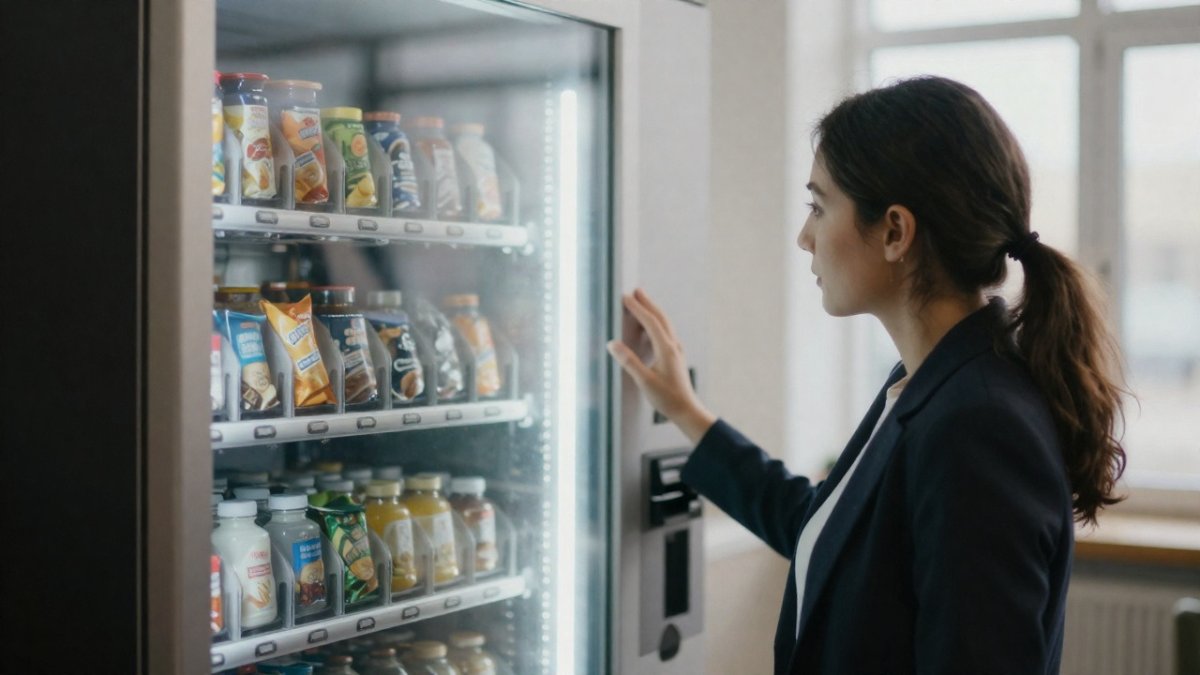
Retry the Selection and Check the Collection Area
Start by trying the same selection again. Many jams clear on a second attempt because the spiral has simply stalled. If the product still does not move, check whether it has dropped into the collection area without you seeing it. Look in the tray, the bottom flap and the dispense area.
- Make one retry, then wait a moment before trying again
- Look carefully at the collection area before reaching in
- If you find the product, take it and check the payment status
Repeated presses can sometimes charge you without a dispense, so avoid pressing the same button over and over.
Lift the Collection Flap and Look for the Product
If the item is not in the tray, check the collection flap. Lift it gently and look for the product lodged behind or beneath it.
Do not shake, tilt or kick the machine to free a product. Doing so can damage the internal sensors and make the fault harder for the operator to diagnose.
The table below sets out the steps in order, with what to do at each and how long to give it.
| Step | What to do | Time or frequency |
|---|---|---|
| Retry the selection | Press the same selection once | One retry, then wait a moment |
| Check the collection area | Look in the tray, bottom flap and dispense area | Before reaching in |
| Lift the collection flap | Lift gently and look behind or beneath it | Only where the flap allows |
| Contact the operator | Report if the product is out of reach | Stop, do not push or shake |
Common Causes of Vending Machine Jams and How to Tell Them Apart
Knowing the likely cause helps you describe the fault clearly when you report it, and it tells you whether the fix is something you can do safely or something only an authorised operator should touch. Most jams fall into a handful of groups, and each has a tell.
Product and loading faults
- Incorrect product size or shape: the item is too tall, too wide or the wrong profile for that spiral or channel. A bag that sits proud of the coil will catch on the shelf above; a can that is too narrow can slip between the spirals.
- Damaged or warped packaging: sticky, bent, swollen or crushed packaging drags on the spiral and stalls it. Crisp packets that have been compressed in transit are a common culprit.
- Overfilled or incorrectly loaded spirals: too many products in a column, items placed the wrong way round, or a product pushed back past the coil’s rest position. The spiral turns but the item never reaches the lip.
A product that is partly out of its slot, or visibly wedged against the shelf, points to a packaging or loading problem. That is an operator fix, not a customer one.
Mechanical and sensor faults
- Worn or misaligned dispensing coil: a spring that has lost tension, a bent pivot lever or a coil that no longer turns through its full arc. The motor runs but the product does not advance.
- Failed dispense sensor: the machine takes payment but no product is released, or the sensor reports a dispense that did not happen. This is the classic “paid but nothing dropped” fault.
- Blocked collection flap or delivery chute: the product vends but cannot reach the tray because the flap is stuck, the chute is obstructed or a previous item is lodged behind it.
A product that does not move at all, with the machine still taking your money, points to a sensor or mechanical fault that the operator must fix.
Watch out: do not try to diagnose a mechanical fault by reaching into the cabinet or turning the coil by hand. The coil can spring back, and the motor may start without warning if the machine is still powered.
Faults you should not attempt to fix
Anything behind the cabinet door, the coil assembly, the sensor board or the payment validator is operator territory. The same applies to a machine that is level-critical: if it has been knocked or is standing unevenly, the spirals can misalign and jam repeatedly. Report it rather than trying to shim or move it yourself.
Getting Your Money Back: Vending Machine Refund Steps
If you paid and received nothing, you are usually entitled to a refund. The key is to act quickly and to gather the right evidence before you leave the machine, because the operator will need it to trace the transaction.
Evidence to collect at the machine
Note the machine’s location, the product you selected and the time of the failed vend. Take a photo of the machine, its display and any error message, and photograph the machine’s ID or asset label if one is visible. Keep your receipt, or note the card or contactless payment entry on your statement. If the machine shows a fault code, write it down exactly.
Contacting the operator
Use the number or email shown on the machine, and give them your evidence in the first message. Many operators also have an online form or a QR code on the cabinet. Ask for a refund and keep a note of any reference number you are given. If the machine is on a site with a reception or facilities team, tell them as well: they often hold the operator’s direct contact details and can log the fault.
If the operator does not respond
Follow up in writing and keep a copy of your message. If the payment was made by card and the operator does not resolve the claim, your card issuer may be able to help. For a small amount, the practical route is usually a written follow-up to the operator first, then the card issuer if that fails.
What to expect
Keep your evidence until any refund appears. If the same machine fails repeatedly, report each failure separately and note the pattern: repeated failed dispenses are a fault the operator needs to fix, not a run of bad luck.
Preventing Vending Machine Jams and Knowing When to Escalate
As a customer, you can help by reporting jams promptly so the operator can act. Stop troubleshooting and escalate if the machine shows a fault code, takes payment without dispensing, has a damaged cabinet or exposed wiring, or keeps jamming after a reset. At that point, leave the repair to the operator or a qualified maintenance service.
For support with your workplace refreshment service, contact The FM Taste.
Frequently Asked Questions
What should I do if a vending machine takes my money but does not dispense my item?
Stop pressing the selection buttons, as repeated attempts can cause further faults. Check the collection area and the flap first, then note the machine number, product, time and amount paid. Use the contact details on the machine or the operator’s website to report the failed dispense and request a refund. Keep your receipt or card statement as evidence, and photograph the display if it shows an error code. Act promptly so the fault can be reported and any refund claim made.
Should I shake or tilt a jammed vending machine?
No. Shaking or tilting a vending machine can damage the coils, sensors and internal mechanisms, and it can cause injury if the cabinet falls or a moving part catches your hand. It can also trigger a safety cut-out or void an operator’s warranty. Instead, try selecting the item again, check the collection area and flap, and report the fault to the operator if the product remains stuck.
How can I get a snack unstuck from a vending machine safely?
Switch off the machine at the power supply if you need to reach inside, and never put your hand into the spiral while it may move. Use a clean, non-metallic tool such as a plastic ruler only if the operator’s guidance permits it. Do not use metal objects near the electrical components or the coin and note mechanisms. If the item is wedged, or you cannot reach it safely, contact the maintenance service rather than forcing it.
What causes a vending machine to jam?
The most common causes are incorrect product size or shape for the dispensing channel, overfilled spirals, damaged or warped packaging, and sticky product residue. Mechanical faults such as a worn spring, a misaligned pivot lever or a faulty dispensing coil can also prevent an item falling correctly. Sensor faults, including a sold-out sensor that reads incorrectly, are another frequent cause. Operators can usually identify the cause from the error message and the location of the jam.


